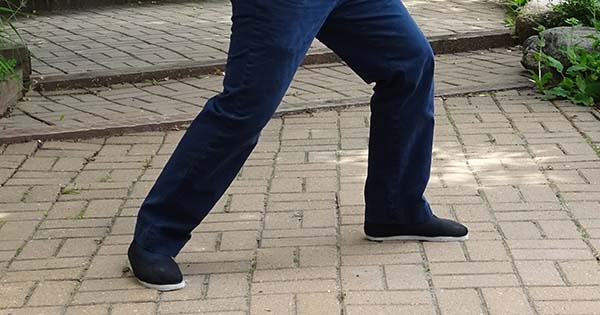
Taijiquan prevents falls and other difficulties in elderly populations, but how does Taijiquan balance stability with mobility in fit practitioners?
Read more
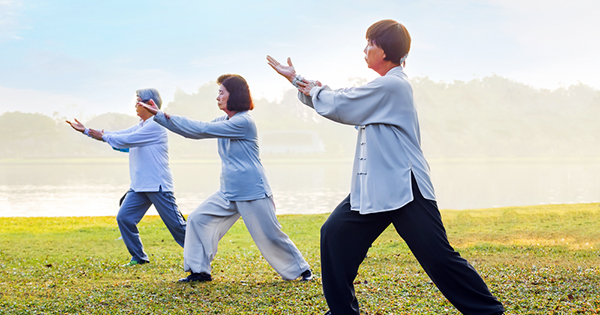
Many Western fitness and exercise programs work from the outside to inside. Strength training springs immediately to mind, and even running fits into this mold,
Read more
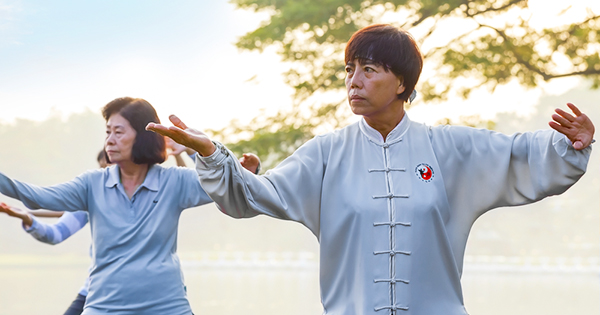
In two previous articles I presented unorthodox views of the four primary jin of Taijiquan’s thirteen energies/techniques peng, lu, ji, and an.
Read more
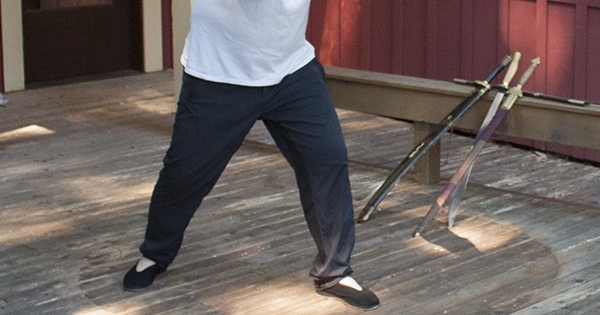
Whether you are taking part in a class indoors or by yourself outdoors, wearing comfortable clothing for practicing Tai Chi is a must.
Read more
Two of the thirteen energies/techniques (十三式 shi san shi) of Taijiquan (太極拳) are peng (掤 rebound or “ward off”) and lu (履 divert or “roll back”).
Read more
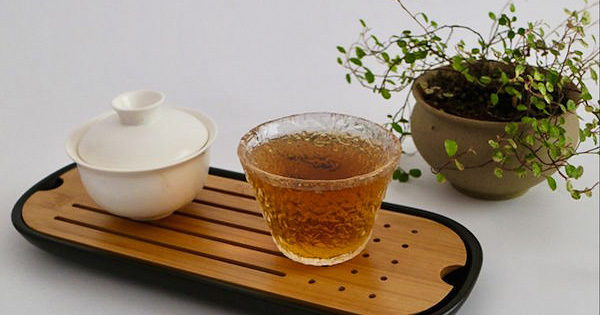
Both tea and Tai Chi come from China and after exploring these art forms it has become obvious that along with cultural connections they complement each other.
Read more
This article addresses attacking a partner/opponent’s defensive “sphere” using an (press) and ji (squeeze), two of the thirteen energies/techniques of Taijiquan
Read more
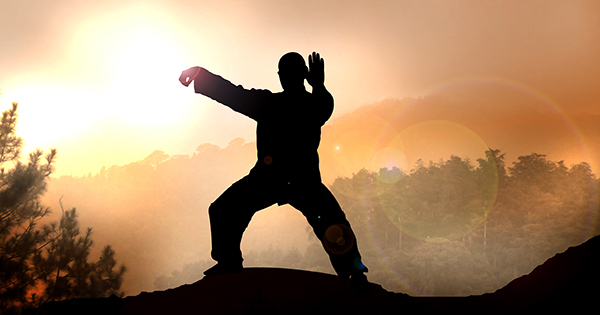
Similarly, Tai Chi practice brings us face to face with discomfort. This is probably the reason that 99% of people quit after a few lessons.
Read more
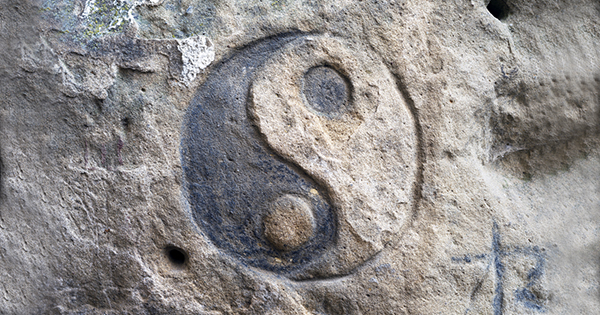
In the practice of Taijiquan, we strive to properly balance the yin and yang principles such that there is no excess and no deficiency, no protrusions...
Read more
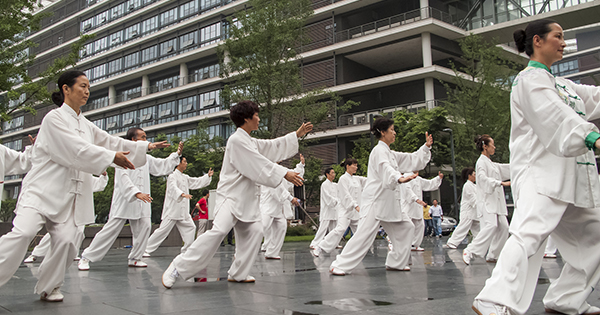
Just as every individual has their personality and idiosyncrasies, schools of Taijiquan (太極拳) also have specific traditions and rules (daotong, 道統, orthodoxy).
Read more