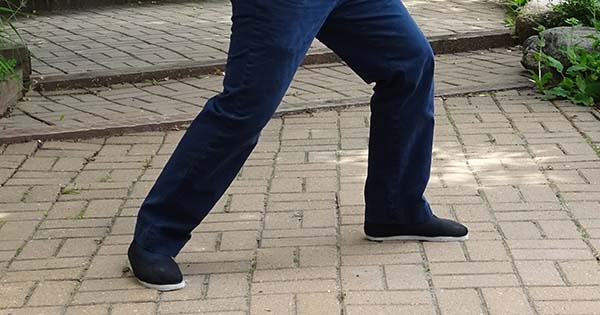
Taijiquan prevents falls and other difficulties in elderly populations, but how does Taijiquan balance stability with mobility in fit practitioners?
Read more
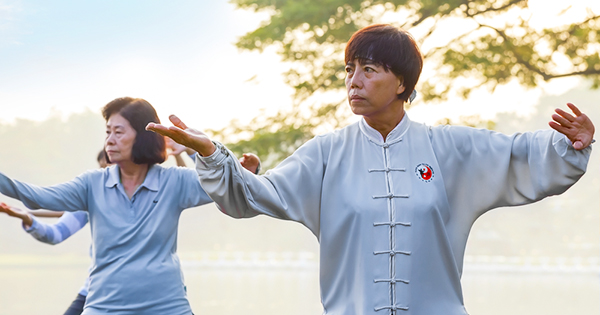
In two previous articles I presented unorthodox views of the four primary jin of Taijiquan’s thirteen energies/techniques peng, lu, ji, and an.
Read more
Two of the thirteen energies/techniques (十三式 shi san shi) of Taijiquan (太極拳) are peng (掤 rebound or “ward off”) and lu (履 divert or “roll back”).
Read more
This article addresses attacking a partner/opponent’s defensive “sphere” using an (press) and ji (squeeze), two of the thirteen energies/techniques of Taijiquan
Read more
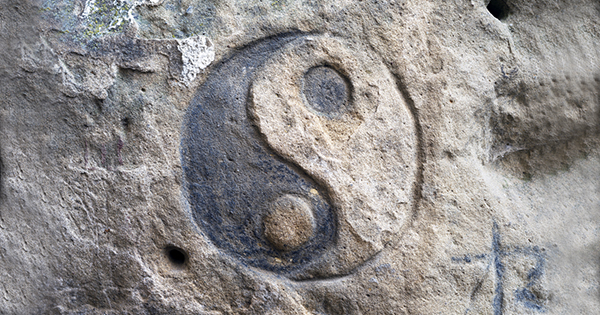
In the practice of Taijiquan, we strive to properly balance the yin and yang principles such that there is no excess and no deficiency, no protrusions...
Read more
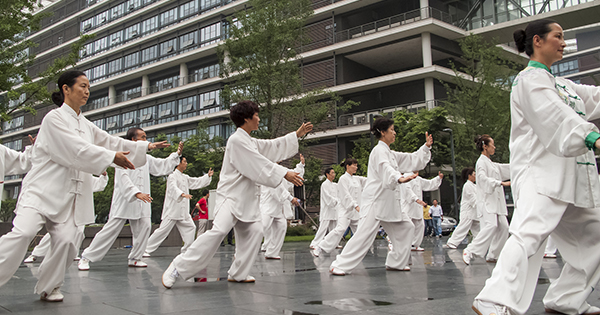
Just as every individual has their personality and idiosyncrasies, schools of Taijiquan (太極拳) also have specific traditions and rules (daotong, 道統, orthodoxy).
Read more
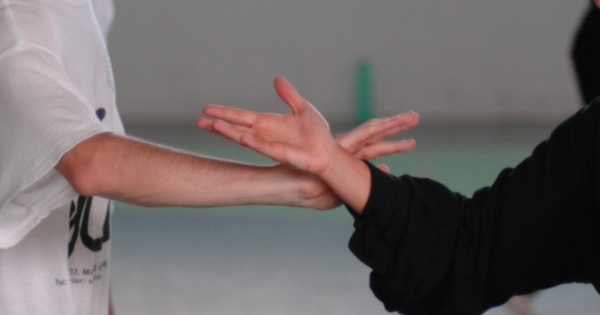
Wu Yuxiang’s Taijiquan classic states “You must act according to your opponent, not try to do things from yourself, for if you go along with your opponent,
Read more

Some practitioners who are older or primarily practice for health practice as softly as possible. Some instead practice as if moving, or "swimming" through molasses.
Read more

Weber’s Law of Just Noticeable Differences can help us understand our perceptions of changes in force against an opponent when practicing Taijiquan (太極拳). Weber’s Law applies to most types of…
Read more
Many Taijiquan (太極拳) practitioners never learn interactive weapons, and some do not even study weaponless interactive principles.
Read more