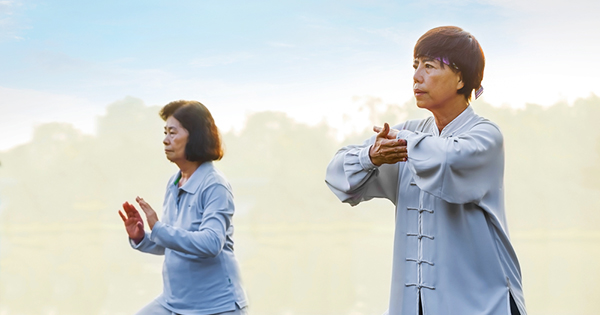
There are many mental factors that should be considered when practicing Taijiquan, and the way that people naturally react mentally can become traps.
Read more

Jazz music has varying degrees of improvisation in its ensemble (and solo) playing. There is a structure, with melody, tempo, key signature, chord progression, and other characteristics for each song,…
Read more
From this, we can infer that strength, speed, youth, etc. are matters of “natural” abilities... different from is developed through the practice of Taijiquan.
Read more

Taijiquan practitioners are familiar with “Starting from your foot, issue through your leg, directing it at your waist, and expressing it at your fingers.
Read more
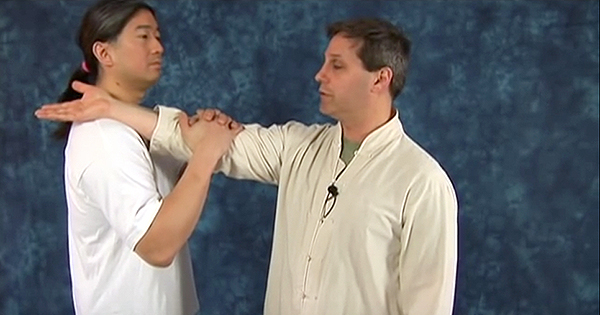
There is a quality that is somewhere between resisting and collapsing that we strive for in Taijiquan. This is reflected in the admonition to avoid butting against (or resisting) as…
Read more
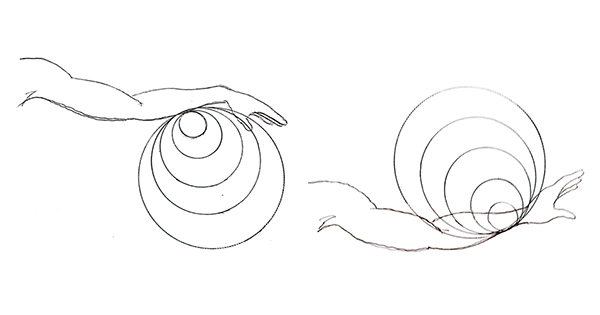
Taijiquan (太極拳) practitioners sometimes think of the body as a cylinder, or as a single sphere with the center located at the lower dantien (丹田elixir field; the lower abdomen, the…
Read more
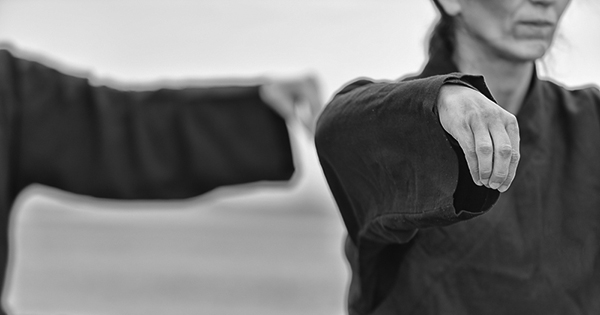
Without feedback, how do we know how and when we improve? Many sports have measurable criteria for detecting improvements , and these can be used as one form of feedback…
Read more
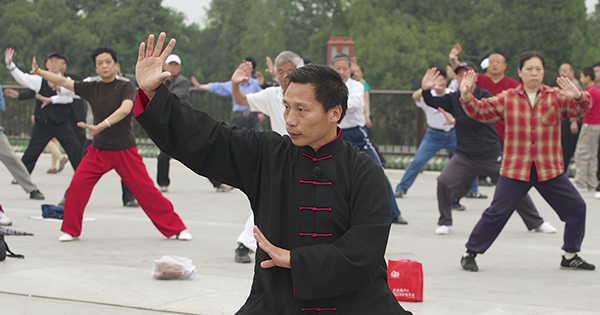
There are several ways that peripheral visual awareness is trained in Taijiquan (太極拳). For example, during push-hands (推手 tui shou) and fighting practice,
Read more
The concept of “four ounces moves a thousand pounds” indicates that size differences should not matter for someone skilled in the art of Taijiquan.
Read more
Acceleration is also used in Taijiquan, there is an emphasis on using a unified (whole-body) structure, therefore emphasizing the “m” (mass) component
Read more