Author: Slanted Flying

  • Mindfulness And Tai Chi

    Mindfulness And Tai Chi

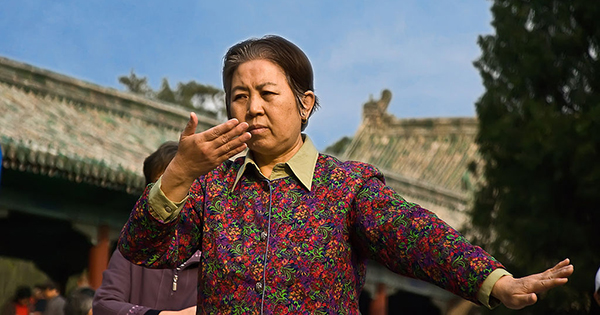
    In our Tai Chi training we are often told to be mindful. So what is mindfulness, and why is it important to our practice of Tai Chi Chuan. Mindfulness is being aware, in the moment, being present in what you are doing and where you are at that moment.

    We need to be mindful of all parts of the body, not only the isolated parts. For example in the movement “Single Whip”, it is very easy to be focused on the lead hand opening out, and not on the the opposite (hooked) hand or on the movement of the legs. This act of being mindful helps to not only unite the parts of the body together, but also the mind and the body.

    Jon Kabat-Zinn, Ph.D. is known internationally for his work as a scientist, writer, and meditation teacher. In this video below, he explains his working definition of mindfulness. This is another look at the meaning of mindfulness so we might better understand its use in our practice of Tai Chi Chuan.

    In the video, he talks about an interesting and important part of mindfulness. That is to be non-judgmental while being mindful. Jon Kabat-Zinn then goes on to say what he means is to not to be caught in those judgements which color the things we like or dislike.

    How could being non-judgmental in our mindfulness affect our practice of Tai Chi Chuan? Perhaps one might not like the way the teacher is telling you how to learn a movement, which you might not quite agree with. If you practice this movement with that judgment in your mind, then you are not being truly mindful, and being in the moment to be aware of all the things that need attention. Perhaps you are proud of yourself that you can do the movements so well. Does this cloud your mindfulness so that you don’t notice flaws in your Tai Chi?

    Practicing your Tai Chi Chuan with true mindfulness is very difficult. There are so many things to remember when learning and even for those that have been practicing for many years. By practicing being mindful in the beginning stages of your training, you ingrain an important part of your training that will become more important as your Tai Chi develops.

    As one becomes more proficient in their Tai Chi Chuan, the practice becomes more of an exercise of the mind than that of the body. The ability to maintain mindfulness in one’s practice is an integral part of achieving higher levels in the development of Tai Chi Chuan.

    Let us know in the comments section below what are your views and experience on “mindfulness” in the practice of your Tai Chi Chuan!
  • World Tai Chi And Qigong Day

    World Tai Chi And Qigong Day

    “One World…One Breath”

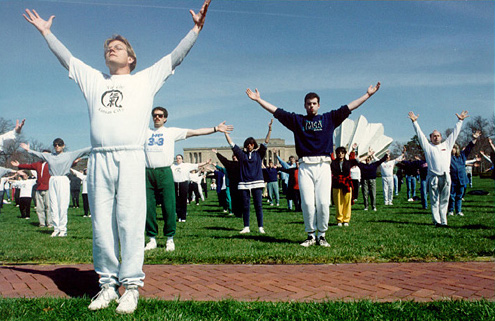
    At 10:00 am on Saturday, April the 27th, the world will breathe as one! The annual World Tai Chi and Qigong Day is held every year on the last Saturday of April. Starting in New Zealand`s Time Zone at 10:00 am and ending 22 hours later in Hawaii`s time Zone, it is almost a full day of celebrating the benefits of Tai Chi Chuan and Qigong across the world.

    World Tai Chi Day

    Participants in at least 70 countries and several hundred cities will take part in this day of awareness for these two arts. Local World Tai Chi and Qigong Day events are organized by Tai Chi Chuan and Qigong schools, groups, and associations independently of the World Tai Chi and Qigong organization.

    The event began originally as a celebration to the healing benefits when a group of about 200 participants gathered on the lawn of the Nelson-Atkins Museum of Art in Kansas City.

    As you watch this video about the World Tai Chi and Qigong Day, enjoy the music “The Breath” in the video by Graeme Revell.

    World Tai Chi and Qiqong Day events in the different cities are organized by local Tai Chi or Qigong schools. If you are interested in organizing your own World Tai Chi and Qigong Day event on April 30th or join in an existing event, you can find more information at the World Tai Chi and Qigong Day website.

  • Opening Dao Documentary

    Opening Dao Documentary

    This is an amazing Short Film Documentary by Gennaro Ambrosino about Daoism, and its connection to the martial arts. Beautifully filmed, it features interviews with scholars, top martial artists, as well as monks who talk about how they understand the “principles of the way” which is known as the Tao, a valuable wisdom that is thousands of years old and still relevant in today’s busy world.

    Opening Dao from LifeArtsMedia on Vimeo.

    [quote]The film contains exclusive interviews with Prof. Chad Hansen and Prof. Chris Fraser from the University of Hong Kong, Dr Wang Daoke from Wudang Taoist Association, Master Yuan Xiu Gang (Wudang Gong Fu Academy) and martial arts performances from Master Heng Wei (Tang Long Kung Fu), Master Yongxing Guan and the students of the Wudang Taoist Kung Fu Academy in Wudang Shan, China.

    The documentary also features a master narrative of the Dao De Ching by Edward Petherbridge, former leading actor of the Royal Shakespeare Company.

    Quote from the Life Arts Media Vimeo page for the documentary[/quote]

    The relation of the Tao to Tai Chi Chuan is inseparable. It is a martial art that is based upon the principles of Taoism. The understanding of these principles and how they apply to the practice of Tai Chi Chuan can greatly enhance one’s own experience in this profound internal martial art.

    You can view the complete Short Film Documentary “Opening Dao”, as well as other great short films online here at the Life Arts Media Vimeo page.

    Don’t forget to check out other great videos on our Tai Chi Videos Page!

  • Tai Chi In The Movie “Vision Quest”

    Tai Chi In The Movie “Vision Quest”

    Every so often when we watch a movie or a TV show and we see a glimpse of tai chi usually in the background of a scene. Once in a while we will actually see Tai Chi being used as a part of the storyline of the movie. In this case, the Tai Chi is being performed by one of the main actors, or someone with who the main actors is associating with.

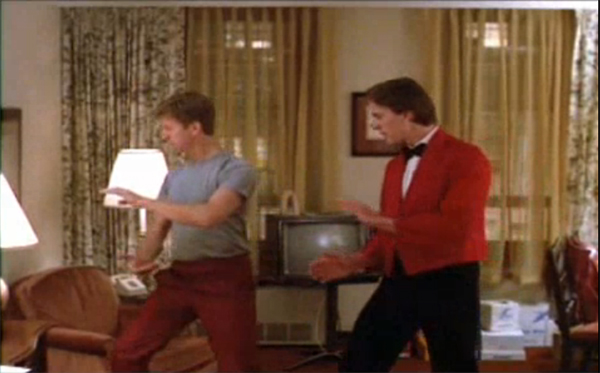
    An example of this is in the movie from 1985 called “Vision Quest” starring Matthew Modine as Louden Swain. In a scene where Louden is working as a Bell Boy at a hotel, he comes across a guest in his room practicing Tai Chi! The outcome of the encounter has Loudin Swain being taught a couple of moves of Tai Chi by the hotel guest with interesting results.

    Check it out in this video clip from the movie!

    We will scour the internet to look for more video clips or stories of Tai Chi in the Movies and TV! If you know of any that you have seen, contact us, and let us know about it.

    If you haven’t seen this movie yet, you can click on the image below to see more about it!

  • The Philosophy of Tai Chi Chuan

    The Philosophy of Tai Chi Chuan

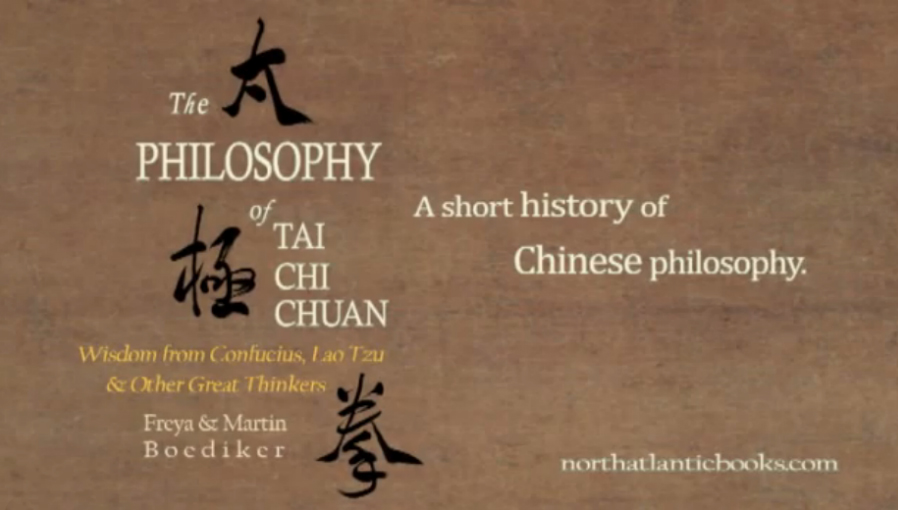
    Freya and Martin Boedicker, the authors of the book “The Philosophy Of Tai Chi Chuan” are both practitioners of the Wu style of Tai Chi Chuan. They are students of Ma Jiangbao, who is the son of the famous Tai Chi masters Ma Yueliang and his wife Wu Yinghua. They live in Germany and teach the Wu style of Tai Chi Chuan all across Europe and even in South Africa.  Together, Freya and Martin Boedicker also run the Forum for Traditional Wu Tai Chi Chuan. You can also read their Blog on “Tai Chi Chuan and Philosophy

    Watch this wonderful video for the book which features Ma Jiangbao demonstrating the finer details of the Wu style of Tai Chi Chuan on Martin Boedicker and other students.

    Here is an interesting review of this book by Gerardo Lopez Sastre. To read the full review as well as others, visit the Amazon page for book “The Philosophy of Tai Chi Chuan”

    [quote]It has been a real pleasure to read this book. If one wants to do more than copy a lot of movements without any meaning one needs to know “the reason behind”. This means not only the more or less hidden applications, but the philosophy that supports them, the core ideas that provide the strategy of Tai Chi and allow the practitioner to know what is right and what is wrong. In this field it is very easy to get lost. A lot of big words and flurry concepts: dao, de, full and empty …. Why not skip all this and concentrate in the practice? A big mistake! Theory without practice is not going to improve our health or our martial ability. But practice without theory is blind. We need to know that some Chinese philosophers believed that the weak overcomes the strong, and that this principle is embodied in Tai Chi. Chinese strategists thought about the art of deception. So if the enemy is strong we must evade him, but if he is holding back, we must look arrogant. And we could continue …[/quote]

    You can now own this excellent book about the philosophy of Tai Chi Chuan. Enhance your understanding of this profound martial art known as Tai Chi Chuan. Just click on the image below to view the details of the book.

  • A Poem By Allen Ginsberg About Tai Chi

    A Poem By Allen Ginsberg About Tai Chi

    Well known American Poet Allen Ginsberg (1926 – 1997) wrote a poem about himself practicing Tai Chi in his kitchen in New York City. It is a whimsical look at practicing in one’s kitchen that is too small, and of all the distractions of the things around him. Ginsberg had learned the Chen Man Ching style of Tai Chi Chuan.

    Enjoy this poem about Tai Chi by Allen Ginsberg for which he wrote for Bataan Faigao, who learned Tai Chi from Chen Man Ching and taught at the Naropa Institute. The text of the same poem is below.

    [quote]

    In my kitchen in New York
    by Allen Ginsberg
    for Bataan Faigao

    Bend knees, shift weight
    Picasso’s blue deathhead self portrait
    tacked on refrigerator door

    This is the only space in the apartment
    big enough to do t’ai chi

    Straighten right foot & rise–I wonder
    if I should have set aside that garbage
    pail

    Raise up my hands & bring them back to
    shoulders–The towels and pyjama
    laundry’s hanging on a rope in the hall

    Push down & grasp the sparrow’s tail
    Those paper boxes of grocery bags are
    blocking the closed door

    Turn north–I should hang up all
    those pots on the stovetop
    Am I holding the world right? That
    Hopi picture on the wall shows
    rain & lightning bolt

    Turn right again–thru the door, God
    my office space is a mess of
    pictures & unanswered letters

    Left on my hips–Thank God Arthur Rimbaud’s
    watching me from over the sink

    Single whip–piano’s in the room, well
    Steven & Maria finally’ll move to their
    own apartment next week! His pants’re
    still here & Julius in his bed

    This gesture’s the opposite of St. Francis
    in Ecstasy by Bellini–hands
    down for me

    I better concentrate on what I’m doing
    weight in belly, move by hips
    No, that was the single whip–that apron’s
    hanging on the North wall a year
    I haven’t used it once
    Except to wipe my hands–the Crane
    spreads its wings have I paid
    the electric bill?

    Playing the guitar do I have enough $
    to leave the rent paid while I’m
    in China?

    Brush knee–that was good
    halavah, pounded sesame seed,
    in the icebox a week

    Withdraw & push–I should
    get a loft or giant living room
    The land speculators bought up all
    the sqaure feet in Manhattan,
    beginning with the Indians

    Cross hands–I should write
    a letter to the Times saying
    it’s unethical

    Come to rest hands down knees
    straight–I wonder how
    my liver’s doing. O.K. I guess
    tonite, I quit smoking last
    week. I wonder if they’ll blow
    up an H Bomb? Probably not.

    -Manhattan Midnite, September 5, 1984

    [/quote]

    If you liked this poem by Allen Ginsberg, you may enjoy some of his other poetry. Check out this book of the collected poems by Ginsberg!

    Don’t forget to check out our other Tai Chi videos and let us know what you think of them!

  • The Eyes and Tai Chi Training

    The Eyes and Tai Chi Training

    The use of the eyes in traditional Tai Chi Chuan is an often misunderstood or even unknown element of training in many schools. So then, what is the importance of the eyes in the training of Tai Chi Chuan, and how does one train the use of the eyes? This article will focus on the use of the eyes in order to build a strong foundation based upon the principles of movement in the beginning stages of training.

    1 patti 060121 1Ds 8266The proper usage of the eyes will help unite the mind and body. The eyes assist in training the body to move in the right manner according to the principles of Tai Chi Chuan. Generally, the body will turn towards the direction in which the eyes look out towards. In fact, if you are looking straight forward or in the wrong direction then the eyes may actually even be a detriment to the proper turning of the waist which we want to achieve in our practice of Tai Chi Chuan.

    I was taught to follow the movement of the lead hand, then as the movement is finishing, “head up and look far away” as I was often instructed to do.  Now, depending upon the specific style and intent of the move, what may be the lead hand for some may not be the lead hand for others. Basically, the lead hand is the hand that is “leading” the direction of the movement.

    For example, let’s look at the movement “Brush Knee Twist Step” from the Traditional Yang style of Tai Chi Chuan starting from the previous posture “Play the Pipa”. (Stylistic differences will vary)

    As the weight shifts into the right leg to allow the left leg to empty for the step, the right hand drops, circles out and up to the right. When the step is completed and the left heel touches the ground the right hand should have circled up to the area by the right side of the head (height of the hand will vary depending on style). The eyes will follow the movement of the right hand as it circles out and back closer to the body.

    As the weight shifts into the left foot, the right hand and arm drop in front of the right chest and then releases away from the chest with the palm forward. The eyes will follow the movement of the right hand until the weight has shifted  approximately 3/4 of the way forward at which point you look far away in the direction of the right hand.

    One thing to note is that when the eyes are looking in the direction of the hand, they are not focused on the hands itself. The area of focus for the eyes is just beyond the the hand, and slightly ahead of the direction in which the hand is traveling. You are not focusing on one point, but rather it is a soft focus of that area.

    So then the the focus is in the direction of the movement of the hands, and not the hands themselves. While the eyes follow the lead hand, the other hand is not forgotten. Try keeping both of the hands within the peripheral vision of the eyes. With training, the following of the hands become more of a mental focus rather than visual. When they eyes look far away, they look beyond the person that may be in front of you, past the wall that is behind them, and past the buildings and hills beyond that!

    This method will help to train the body to move in a more unified manner. The use of “whole body” movement is one of the hallmarks of traditional Tai Chi Chuan. By following the movement of the hands with the eyes, it allows a process that starts to train the mind-intent. The eyes connect with the movement, the mind connects with the eyes, and with time the mind connects with the physical movement without the need of the intent of the eyes.

    Continue to page 2…

  • Chen Village Documentary Trailer

    Chen Village Documentary Trailer

    A wonderful documentary by Empty Mind Films on the Chen Village that is famous for being the birth place of Chen Family Style Tai Chi Chuan. The documentary looks at life in the village, the training of Chen Tai Chi that goes on in the village, and about Chen Family Tai Chi Chuan itself. You hear of the experiences of foreigners who have traveled to China to live and train Tai Chi at the Chen Village.

    The Documentary features Chen Tai Chi masters such as Chen Xiaowang, his brother Chen Xiaoxing who is the head of the Chen Village Tai Chi school, Chen Ziqiang who is the son of Chen Xiaoxing, as well as Chen Bing who is a nephew of Chen Xiaowang and Chen Xiaoxing.

    Watch this wonderful trailer of the documentary “Chen Village”

    Now you can own this wonderful documentary about the famous Chen Village, and learn about the life, the training and the people of this unique village that is the birthplace of Chen Family Tai Chi Chuan.
    Click on the image of the DVD below to see more!

    If you enjoyed this wonderful article about Tai Chi, please click the “Like” button!

    Don’t forget to leave a comment!

  • Tung Ying Chieh And His Words Of Experience

    Tung Ying Chieh And His Words Of Experience

    Fist Under Elbow

    Tung Ying Chieh (1898-1961) was a well known master of the traditional Yang style of Tai Chi Chuan. He was a top student of the famous 3rd generation Yang Family Tai Chi Chuan master Yang Cheng Fu (1883–1936). Tung Ying Chieh trained with Yang Cheng Fu for more than 17 years, and assisted with Yang with teaching when he went on travels through China

    Tung Ying Chieh wrote this essay on important points of the practice of Tai Chi Chuan. Although Tung was a master of the Yang style and the Wu/Hao styles of Tai Chi Chuan, this work is valuable to all students of Tai Chi Chuan no matter the style which they might practice.

    This is one of several essays which Tung Ying Chieh wrote and included in his “Red Book”, on Tai Chi Chuan called “Tai Chi Chuan Explained”

    Below is an excerpt from the book on the section called “Words of Experience”.

    [quote]

    1. Tai Chi Chuan is an internal martial art exercise. Strength is produced in the bones. Power is reserved at the muscles. It does not require one to have tough skin or thick muscles, but sunken “chi” and strong bones are required. Therefore, learners have no suffering of broken bones and hurt muscles, and the tiredness of jumping, but just move naturally to find the potential of power of origin. It is an exercise to develop the your original power.

    2. The three main points: spirit, intention, and posture (likeness of the movement’s names) have to be there.If the posture is correct, then the spirit and intention are there, and you will have good progression. Also, you will feel differently every day. Learners should try to feel the differences intentionally.

    3. If the posture is not correct, then spirit and intention are not there. The result will be just like cooking an empty pot, even after many years of practice you will not be successful. There is a tease saying that ten years of Tai Chi Chuan practice is not as good as three years of kung fu. Therefore, for good Tai Chi Chuan practice: first you have to practice diligently; and secondly you need to have good understanding. Also, the result is dependent on your intelligence, but hard practice can help stupidity. So you should always encourage yourself to practice harder.

    4. Breathing during practice – to breathe naturally. Do not force your breath deeply. After many times of practice, your Tai Chi Chuan will reach the natural point. By that time, the breath will be balanced automatically.

    [/quote]

    To see the rest of the 16 points, read the full article which was translated by Albert Tang. Follow this Link to the site of Little Mountain Tai Chi Club

  • Tai Chi Caledonia – A Week Of Tai Chi In Scotland

    Tai Chi Caledonia – A Week Of Tai Chi In Scotland

    Tai Chi Caledonia is a one week long training intensive in the beautiful countryside of Scotland. It is into it’s 18th year of operation, and features many world class Tai Chi instructors. Participants come to this event from all over the world! As well as Tai Chi Chuan, there are also other Chinese internal martial arts that are covered as well during the week. Tai Chi Caledonia 2013 will be held from Friday 12th – Friday 19th of July.

    [quote]Participant Feedback
    Just wanted to thank you for a fantastic experience at your excellent event.I have to admit, when I watched the Highland lot drive off on Sunday evening, I thought I’d made a mistake in staying. That thought had completely dissipated by 8.15 the following morning. The calibre of Instructors and Students alongside the enormous amount of organisation on your part ensured a thoroughly wonderful time. Back in one of my normal classes today, I realised how much the intensive week of training, practise and relaxation has accelerated my learning and experience of Tai Chi. Hope you have time to rest and reflect on your success.

    Very best wishes,

    Carolanne Mainland
    [/quote]

    To read the full article which this quote is from and find out more about this amazing week long intensive, visit the Website of Tai Chi Caledonia,

    Watch this wonderful video of Tai Chi Caledonia from 2012. Looks like an amazing experience!

    If you enjoyed this, please click on the “Like” Button below and share!